
Interpersonal Communication Course Description
Interpersonal Communication Course Description - Emphasis is on the communication process; This course introduces the practices and principles of interpersonal communication in both dyadic and group settings. Your enthusiastic and positive approach in the classroom will create an atmosphere that will help every. Course information course descriptions emphasis is placed on interpersonal skills for the workplace. Demonstrate an awareness of empathic, ethical, and emotional interpersonal communication. Com 120 intro to interpersonal. Students learn the characteristics and process of interpersonal communication including perception, speech and language, nonverbal behaviors, listening and feedback, conflict and conflict resolution, the ethics of interpersonal communication, relationship development and. Increase understanding of how technology and media affects interpersonal communication. Engage you in activities that are based on your completed homework and readings. By focusing on the influence of interpersonal communication on individual identity and personal, social, and professional relationships, this course will prepare you to understand how relationships are created, sustained, and terminated in human interaction. (goal 1d) develop and demonstrate skills in managing perception, disclosure, assertiveness, emotions and conflict. Students will study and apply communication principles involving language, nonverbal communication, and culture as they relate to. Course information course descriptions emphasis is placed on interpersonal skills for the workplace. The course will provide knowledge about principles of interpersonal communication and interpersonal communication competencies such as analysis of the role of interpersonal communication to In this course, you will learn what interpersonal communication is, how to analyze different aspects of it, and how to improve your own skills. Students learn rhetorical principles and develop better interpersonal communication skills, including conflict resolution, listening, nonverbal communication, and verbal communication. Analyze the role of verbal and nonverbal behavior in interpersonal communication. We’ll take a mindfulness approach to study communication theory and research and apply it to everyday interpersonal interactions in the class. It is not a public speaking class. This course introduces the practices and principles of interpersonal communication in both dyadic and group settings. Recognize how emotions and the expression of them affect interpersonal relationships. (goal 1d) develop and demonstrate skills in managing perception, disclosure, assertiveness, emotions and conflict. Identify causes of and strategies to manage interpersonal conflict. Demonstrate an awareness of empathic, ethical, and emotional interpersonal communication. (goal 1e, 2c, 2d) describe the listening process and develop one’s own listening skills within diverse. Emphasis is on the communication process; In this course, you will learn what interpersonal communication is, how to analyze different aspects of it, and how to improve your own skills. Your enthusiastic and positive approach in the classroom will create an atmosphere that will help every. It is not a public speaking class. Engage you in activities that are based. Course information course descriptions emphasis is placed on interpersonal skills for the workplace. Students explore and discuss listening, verbal communication, nonverbal communication, communication styles, culture, giving and receiving feedback, and interaction in a variety of modalities. Employ listening strategies designed to enhance interpersonal relationships. (goal 1e, 2c, 2d) describe the listening process and develop one’s own listening skills within diverse. Your enthusiastic and positive approach in the classroom will create an atmosphere that will help every. It is not a public speaking class. (goal 1d) develop and demonstrate skills in managing perception, disclosure, assertiveness, emotions and conflict. This course examines the process of interpersonal communication from various perspectives, including dyadic interactions, how we perceive others, listening skills, emotions, language, and. Increase understanding of how technology and media affects interpersonal communication. Analyze the role of verbal and nonverbal communication in various interpersonal episodes and diverse contexts. Identify causes of and strategies to manage interpersonal conflict. We’ll take a mindfulness approach to study communication theory and research and apply it to everyday interpersonal interactions in the class. Demonstrate an awareness of empathic,. (goal 1e, 2c, 2d) describe the listening process and develop one’s own listening skills within diverse contexts. Demonstrate an awareness of empathic, ethical, and emotional interpersonal communication. Identify causes of and strategies to manage interpersonal conflict. This course introduces basic concepts for understanding communication in interpersonal contexts. Recognize how emotions and the expression of them affect interpersonal relationships. Describe how culture, identity, perception, biases, and power influence the communication process. Increase understanding of how technology and media affects interpersonal communication. In this course, you will learn what interpersonal communication is, how to analyze different aspects of it, and how to improve your own skills. (goal 1e, 2c, 2d) describe the listening process and develop one’s own listening skills. Describe how culture, identity, perception, biases, and power influence the communication process. Analyze the role of verbal and nonverbal behavior in interpersonal communication. We’ll take a mindfulness approach to study communication theory and research and apply it to everyday interpersonal interactions in the class. Analyze the role of verbal and nonverbal communication in various interpersonal episodes and diverse contexts. Students. (goal 1e, 2c, 2d) describe the listening process and develop one’s own listening skills within diverse contexts. Describe how culture, identity, perception, biases, and power influence the communication process. Course information course descriptions emphasis is placed on interpersonal skills for the workplace. Demonstrate an awareness of empathic, ethical, and emotional interpersonal communication. This course is an introduction to the field,. (goal 1e, 2c, 2d) describe the listening process and develop one’s own listening skills within diverse contexts. This course is designed as an introduction to interpersonal communication. Course information course descriptions emphasis is placed on interpersonal skills for the workplace. Increase understanding of how technology and media affects interpersonal communication. Demonstrate an awareness of empathic, ethical, and emotional interpersonal communication. It is not a public speaking class. By focusing on the influence of interpersonal communication on individual identity and personal, social, and professional relationships, this course will prepare you to understand how relationships are created, sustained, and terminated in human interaction. Your enthusiastic and positive approach in the classroom will create an atmosphere that will help every. This course examines the process of interpersonal communication from various perspectives, including dyadic interactions, how we perceive others, listening skills, emotions, language, and nonverbal communications. Com 120 intro to interpersonal. This course is an introduction to the field, principles, and concepts of interpersonal communication. This course introduces the practices and principles of interpersonal communication in both dyadic and group settings. Course information course descriptions emphasis is placed on interpersonal skills for the workplace. This course is designed as an introduction to interpersonal communication. Students will study and apply communication principles involving language, nonverbal communication, and culture as they relate to. Students in this course examine practical concepts and soft skills for personal and professional success. Students examine components of interpersonal communication such as listening, perception, managing conflict, etc., then apply specific strategies to build relationships. Students explore and discuss listening, verbal communication, nonverbal communication, communication styles, culture, giving and receiving feedback, and interaction in a variety of modalities. This course introduces basic concepts for understanding communication in interpersonal contexts. Students learn the characteristics and process of interpersonal communication including perception, speech and language, nonverbal behaviors, listening and feedback, conflict and conflict resolution, the ethics of interpersonal communication, relationship development and. Demonstrate an awareness of empathic, ethical, and emotional interpersonal communication.
INTERPERSONAL COMMUNICATION Course Syllabus

Introduction of interpersonal communication Communication Skills

Interpersonal Communication Training Ppt Powerpoint Outline Visuals Cpb
Chapter 1 Interpersonal Communication PPT

Introduction to Interpersonal Communication
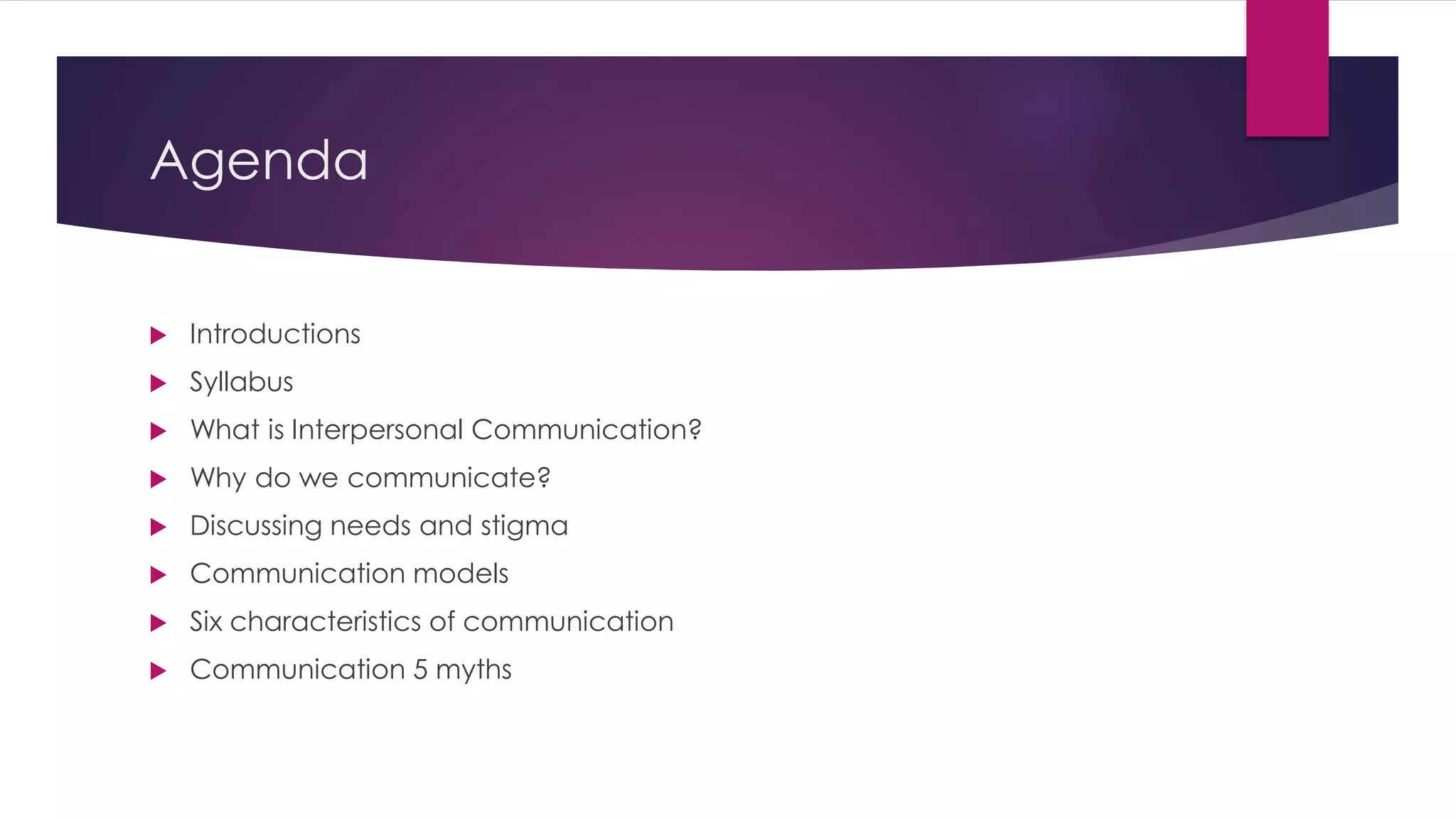
Chapter 1 Interpersonal Communication PPT
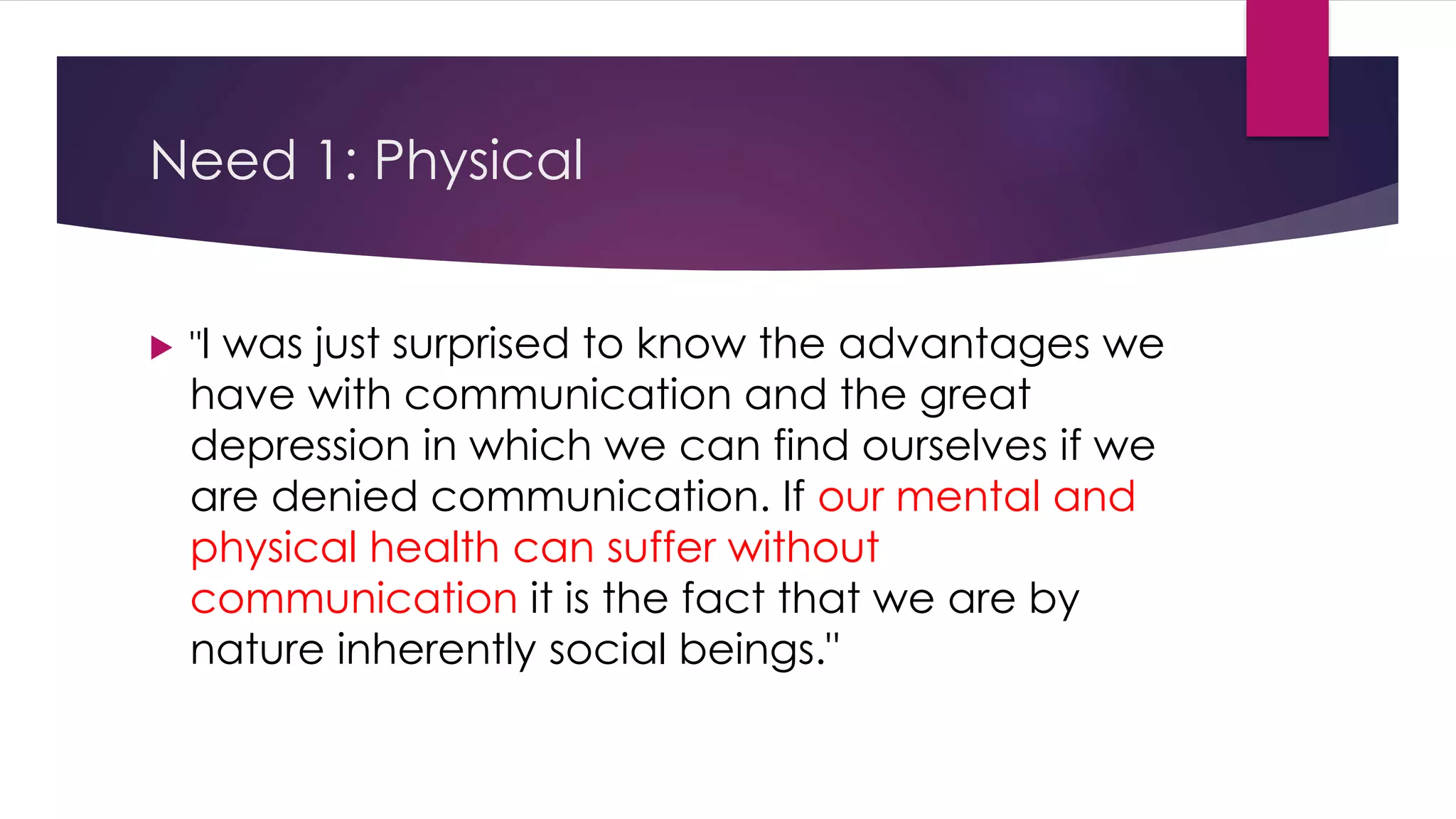
Chapter 1 Interpersonal Communication PPT
Chapter 1 Interpersonal Communication PPT
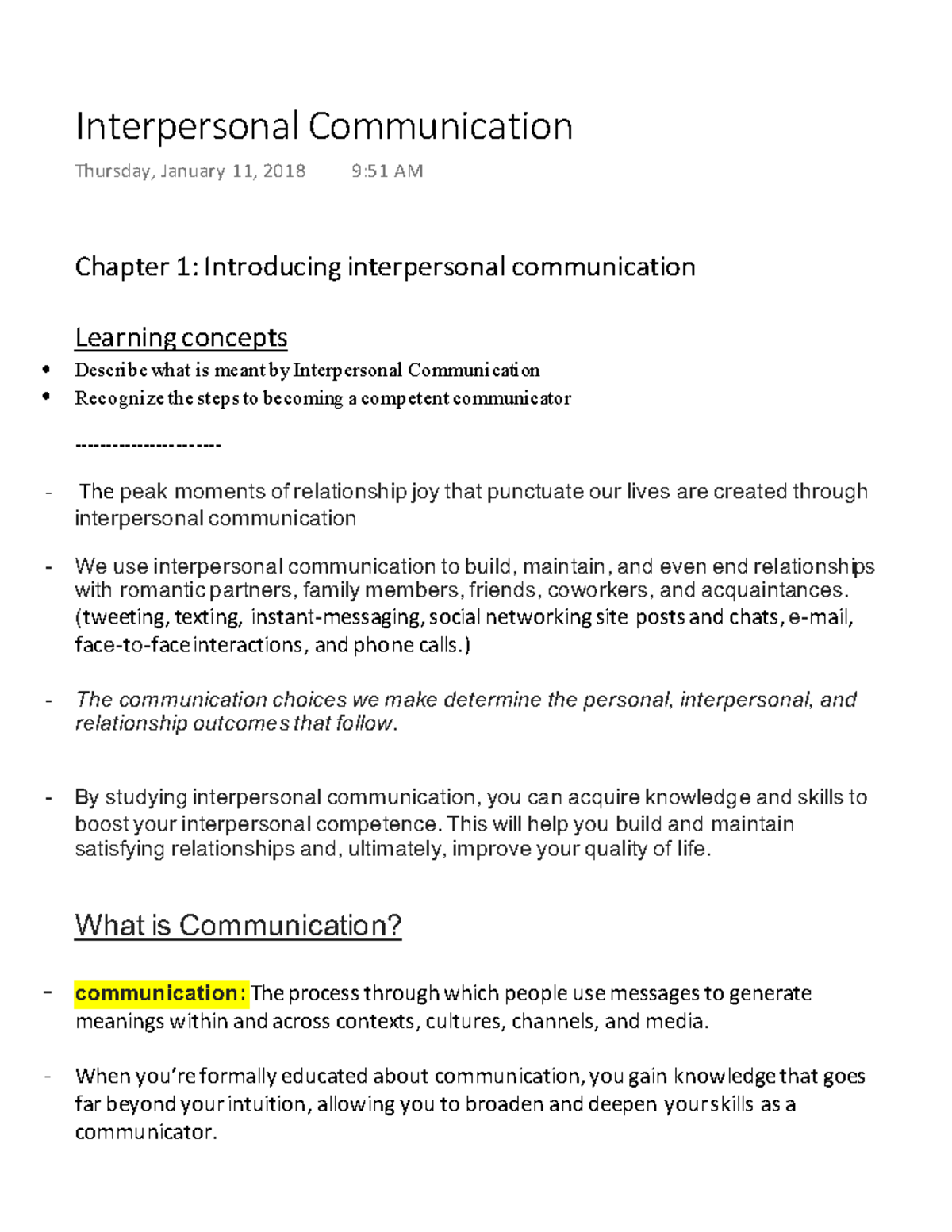
Interpersonal Communication Chap.1 Chapter 1 Introducing

File Interpersonal Communication
(Goal 1E, 2C, 2D) Describe The Listening Process And Develop One’s Own Listening Skills Within Diverse Contexts.
Emphasis Is On The Communication Process;
We’ll Take A Mindfulness Approach To Study Communication Theory And Research And Apply It To Everyday Interpersonal Interactions In The Class.
Employ Listening Strategies Designed To Enhance Interpersonal Relationships.
Related Post: