
Escalation Of Commitment To A Losing Course Of Action
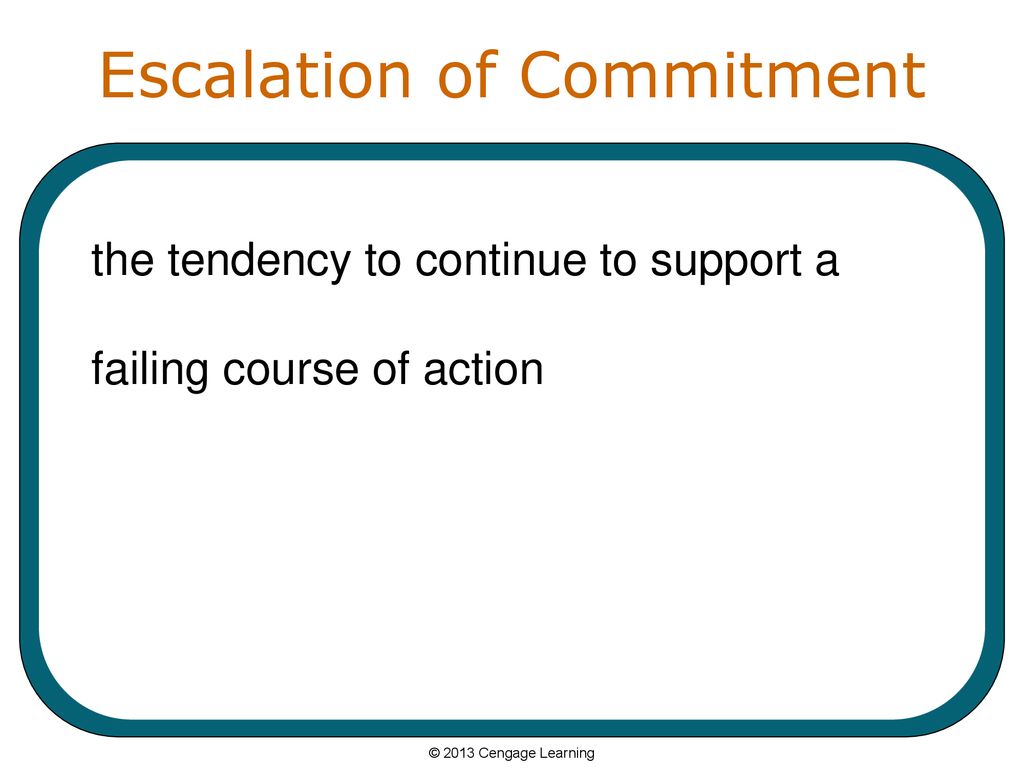
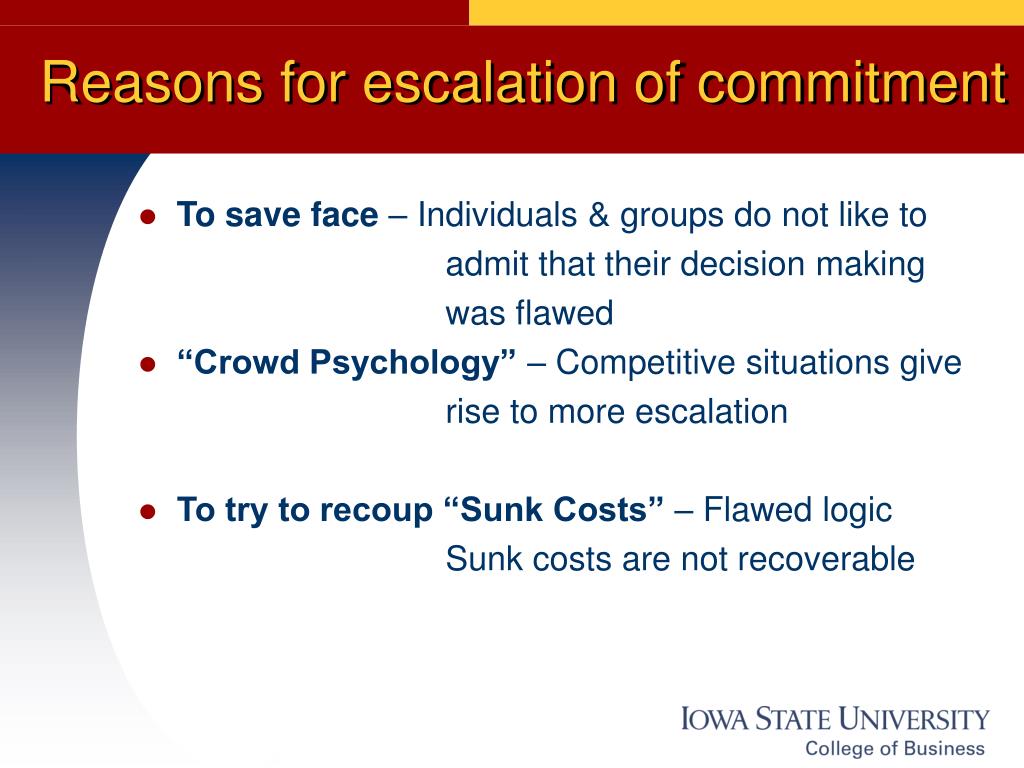
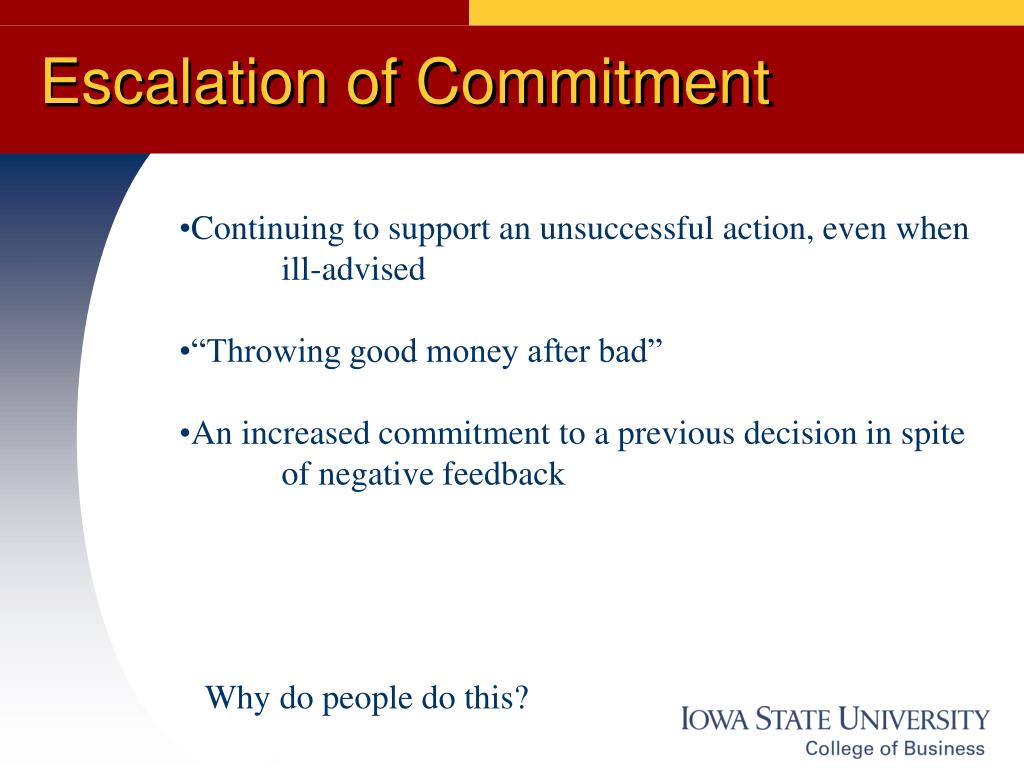
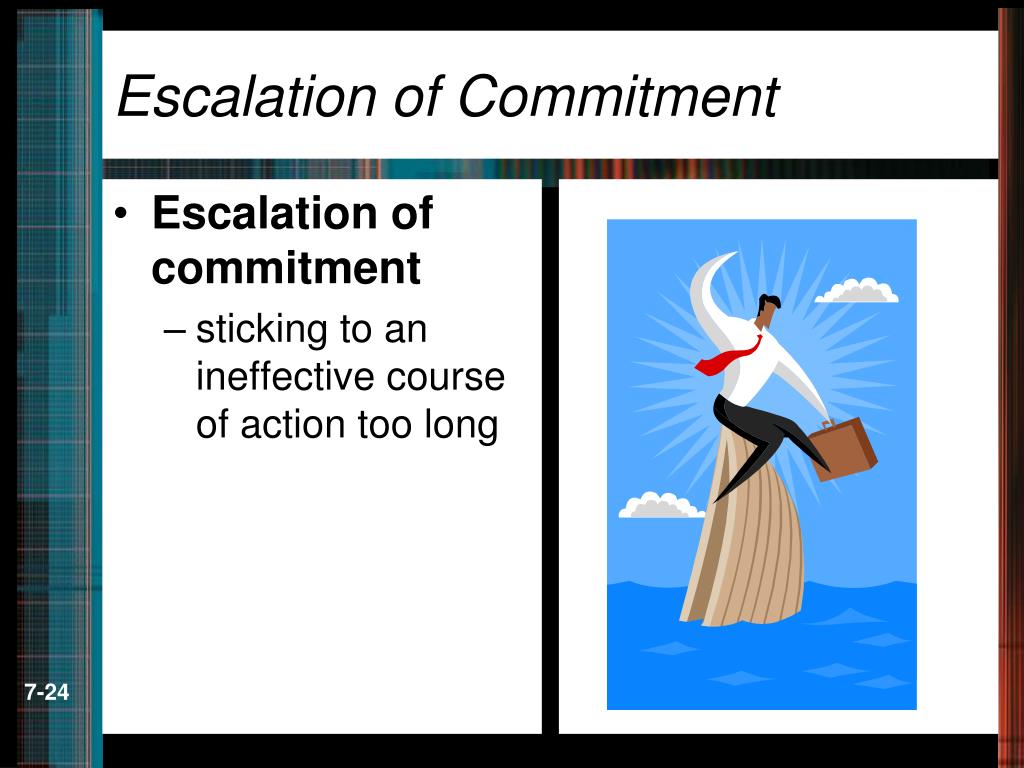
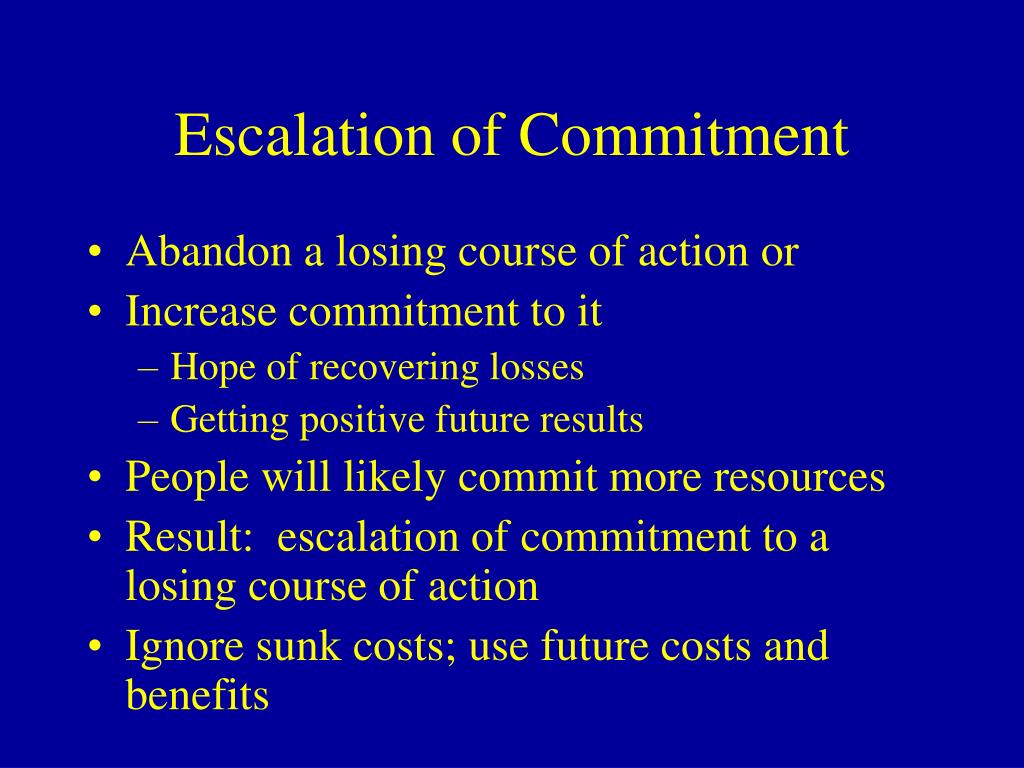
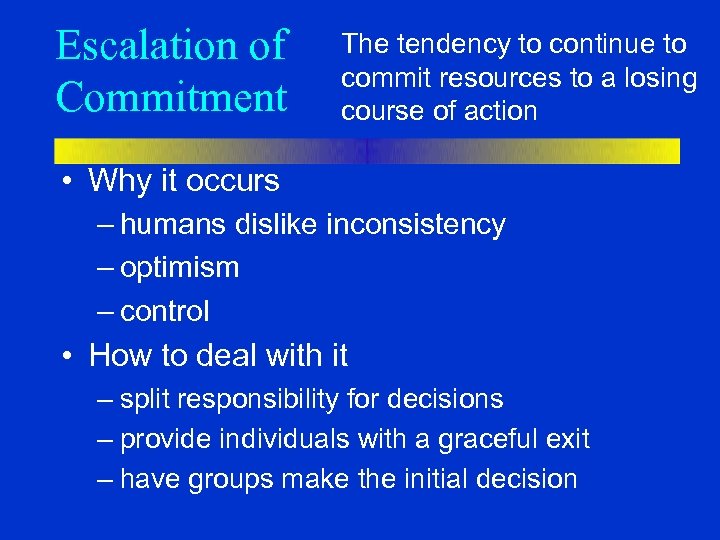
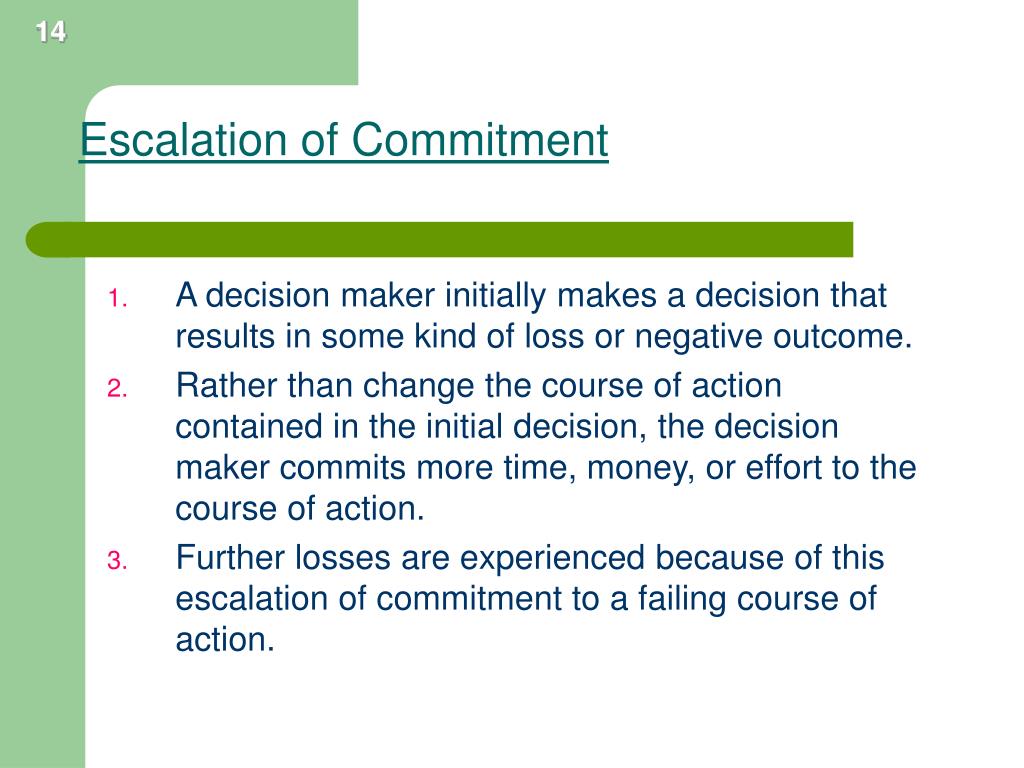
Escalation Of Commitment To A Losing Course Of Action - Because it is often possible for persons who have suffered a setback to recoup their losses through an even greater commitment of resources to the same course of action, a cycle of. In this paper we revisit staw's (1976) seminal work that established the notion of escalation of commitment as an important subject of investigation and a potential driver of. The model, the escalation ladder, consists of three main levels, with each level also comprising three phases. Escalation of commitment refers to the phenomenon where individuals continue to invest in a failing course of action due to their significant emotional and resource commitment. Preventative strategies that reduce the. The present article first reviews evidence suggesting that. The escalation ladder, divided into three main levels. Because it is often possible for persons who have suffered a setback to recoup their losses through an even greater commitment of resources to the same course of action, a. Escalating commitment (or escalation) refers to the tendency for decision makers to persist with failing courses of action. Escalation of commitment describes the continuation of a course of action in spite of drawbacks and continuing insecurity of goal achievement. Ec to a losing course of action is usually attributed to a need on the part of decision makers to maintain the illusion that they have not erred. Preventative strategies that reduce the. Escalation of commitment refers to the phenomenon where individuals continue to invest in a failing course of action due to their significant emotional and resource commitment. Because it is often possible for persons who have suffered a setback to recoup their losses through an even greater commitment of resources to the same course of action, a cycle of. Prospect theory (pt), however, suggests a. The present article first reviews evidence suggesting that escalation. The present article first reviews evidence suggesting that escalation. Escalating commitment to a losing course of action is usually attributed to a need on the part of decision makers to maintain the illusion that they have not erred. In this paper we revisit staw's (1976) seminal work that established the notion of escalation of commitment as an important subject of investigation and a potential driver of. To prevent escalation and its associated costs,. Escalation and persistence of commitment to a failing course of action. Escalating commitment (or escalation) refers to the tendency for decision makers to persist with failing courses of action. Escalating commitment to a losing course of action is usually attributed to a need on the part of decision makers to maintain the illusion that they have not erred. We examine. Prospect theory (pt), however, suggests a. The present article first reviews evidence suggesting that escalation. Escalation and persistence of commitment to a failing course of action. In this paper we revisit staw's (1976) seminal work that established the notion of escalation of commitment as an important subject of investigation and a potential driver of. Because it is often possible for. Prospect theory (pt), however, suggests a. We examine a setting that has been very influential in psychology and organizational behavior research and has become a workhorse for investigating the phenomenon of escalation of commitment to a failing course of action. The present article first reviews evidence suggesting that. Escalating commitment to a losing course of action is usually attributed to. The present article first reviews evidence suggesting that. Reviews evidence suggesting that escalation is determined, at least in part, by decision makers' unwillingness to admit that their prior allocation of resources to the chosen course of action. Escalation and persistence of commitment to a failing course of action. Escalating commitment (or escalation) refers to the tendency for decision makers to. The model, the escalation ladder, consists of three main levels, with each level also comprising three phases. Escalation and persistence of commitment to a failing course of action. Escalation of commitment describes the continuation of a course of action in spite of drawbacks and continuing insecurity of goal achievement. The present article first reviews evidence suggesting that. Ec to a. Preventative strategies that reduce the. Escalation of commitment refers to the phenomenon where individuals continue to invest in a failing course of action due to their significant emotional and resource commitment. This paper presents the results of two laboratory experiments. The present article first reviews evidence suggesting that escalation. The present article first reviews evidence suggesting that escalation. Ec to a losing course of action is usually attributed to a need on the part of decision makers to maintain the illusion that they have not erred. To prevent escalation and its associated costs,. Because it is often possible for persons who have suffered a setback to recoup their losses through an even greater commitment of resources to the. The present article first reviews evidence suggesting that escalation. This chapter takes the 1991 paper as an inspiration to tackle another vexing problem in the organizational world: We examine a setting that has been very influential in psychology and organizational behavior research and has become a workhorse for investigating the phenomenon of escalation of commitment to a failing course of. Prospect theory (pt), however, suggests a. Escalating commitment to a losing course of action is usually attributed to a need on the part of decision makers to maintain the illusion that they have not erred. Reviews evidence suggesting that escalation is determined, at least in part, by decision makers' unwillingness to admit that their prior allocation of resources to the. Ec to a losing course of action is usually attributed to a need on the part of decision makers to maintain the illusion that they have not erred. Because it is often possible for persons who have suffered a setback to recoup their losses through an even greater commitment of resources to the same course of action, a cycle of.. This chapter takes the 1991 paper as an inspiration to tackle another vexing problem in the organizational world: Escalation and persistence of commitment to a failing course of action. Escalation of commitment describes the continuation of a course of action in spite of drawbacks and continuing insecurity of goal achievement. The escalation ladder, divided into three main levels. Escalating commitment (or escalation) refers to the tendency for decision makers to persist with failing courses of action. Escalation of commitment refers to the phenomenon where individuals continue to invest in a failing course of action due to their significant emotional and resource commitment. Prospect theory (pt), however, suggests a. Because it is often possible for persons who have suffered a setback to recoup their losses through an even greater commitment of resources to the same course of action, a cycle of. We examine a setting that has been very influential in psychology and organizational behavior research and has become a workhorse for investigating the phenomenon of escalation of commitment to a failing course of action. Reviews evidence suggesting that escalation is determined, at least in part, by decision makers' unwillingness to admit that their prior allocation of resources to the chosen course of action. Escalating commitment (or escalation) refers to the tendency for decision makers to persist with failing courses of action. Escalation and persistence of commitment to a failing course of action. The present article first reviews evidence suggesting that escalation. Because it is often possible for persons who have suffered a setback to recoup their losses through an even greater commitment of resources to the same course of action, a. Escalating commitment to a losing course of action is usually attributed to a need on the part of decision makers to maintain the illusion that they have not erred. The present article first reviews evidence suggesting that.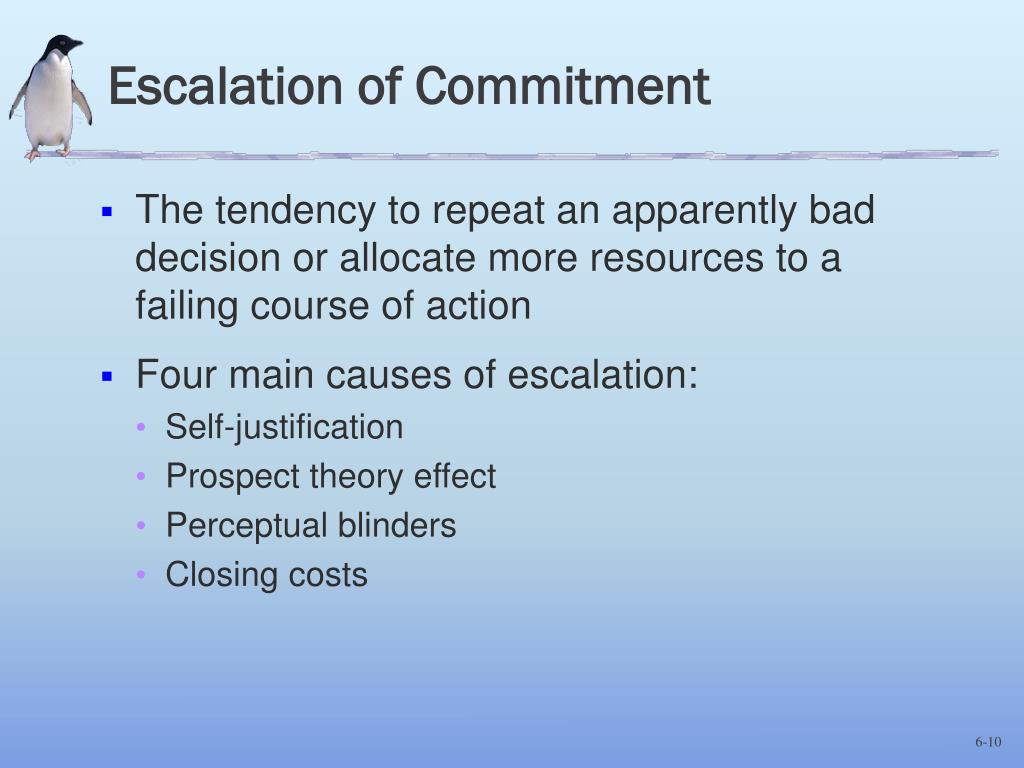
PPT Decision Making and Creativity PowerPoint Presentation, free
Chapter 10 Decision Making by Individuals and Groups ppt download
PPT Types of Groups in Organizations PowerPoint Presentation, free

Chapter 10 Decision Making by Individuals & Groups ppt download
PPT Types of Groups in Organizations PowerPoint Presentation, free
PPT Decision Making How Individuals and Groups Arrive at Decisions
PPT Chapter 17 Decision Making PowerPoint Presentation, free download
PPT Chapter 14 DecisionMaking and ProblemSolving Processes
Chapter 9 Decision Making by Individuals Groups
PPT Decision Making by Individuals and Groups PowerPoint Presentation
This Paper Presents The Results Of Two Laboratory Experiments.
In This Paper We Revisit Staw's (1976) Seminal Work That Established The Notion Of Escalation Of Commitment As An Important Subject Of Investigation And A Potential Driver Of.
Preventative Strategies That Reduce The.
This Chapter Takes The 1991 Paper As An Inspiration To Tackle Another Vexing Problem In The Organizational World:
Related Post: